Telling Our Story Right: Aligning Narratives for Stronger Destination Branding
The world of tourism today is more competitive than it has ever been. Every destination, from entire countries to single cities, is vying for the attention of travelers, investors, and global audiences. Yet attention is scarce. In an age where people are bombarded by images and information on a daily basis, the strongest narratives are those that not only inform but also move people on an emotional level.
This is the heart of our discussion at the World Tourism Communication Forum in Yerevan, where I will moderate a panel titled “Telling Our Story Right: Aligning Narratives for Stronger Destination Branding” at 11.45 on Friday, October 24. The idea behind the session is simple, but also urgent: if we do not tell our own story, someone else will tell it for us. And once a stereotype is established, it becomes very difficult to change.
Tourism promotion is no longer about catalogues of information or lists of attractions. What really drives decisions today are visuals and emotions — the images of a sunset over a historic city, the sound of laughter in a street market, the story of a traveler discovering something unexpected. These are the moments that influence not only tourists but also investors and partners. At the same time, we must deal with the persistence of stereotypes. Destinations often find themselves trapped by clichés — Greece as only “sun and sea,” Armenia as only “churches and history,” or Georgia as only “wine and mountains.” These associations may bring recognition, but they do not reflect the full richness of a place. If we want to compete in the global tourism market, we must learn how to expand and challenge these stereotypes, offering stories that are more authentic, more complex, and more inspiring.
To explore these challenges, our panel brings together four remarkable individuals from very different backgrounds, each of whom looks at storytelling through a different lens.
Angela Varela, newly appointed President of the Greek National Tourism Organization, represents the perspective of a country that is already among the world’s most recognizable destinations. Angela’s career has been devoted to tourism marketing both inside Greece and abroad, and her new role places her at the helm of Greece’s national branding at a crucial time. Greece is instantly recognizable, and its iconic images are known the world over. But this recognition also comes with a challenge: how do you keep a brand fresh when the images are already so famous? Angela will discuss how Greece can balance between showing the iconic blue seas and whitewashed villages people expect, and revealing new stories of gastronomy, culture, and year-round experiences that go beyond the clichés.
From a very different angle, Gevorg Orbelyan, Director of the Yerevan History Museum, brings the perspective of a cultural storyteller rooted in place. For nearly two decades, he has been interpreting Yerevan’s history through exhibitions, books, and public initiatives. His work illustrates how heritage can be transformed into a living narrative, not just for scholars or locals, but for global visitors. Through initiatives such as the “Visit Yerevan” tourism portal, he has shown how a city can make its history accessible, relevant, and engaging in a digital age. Gevorg will help us understand how local stories, told authentically, can compete on the international stage, and how museums and cultural institutions can move beyond the walls of their buildings to shape the way the world perceives a destination.
Kai Partale, an international expert in destination marketing and management, brings a global perspective shaped by more than 25 years of experience. He has worked on branding and strategy projects in Asia, Africa, the Middle East, and Europe, often in regions where competition for tourists is intense and resources are limited. His work has ranged from building national brands to creating destination management organizations and advising governments and institutions on how to structure their tourism marketing effectively. Kai’s contribution to the discussion will be to show how strategy and structure translate into images and emotions. He will explore how local stories, like those of Yerevan, can be aligned with national campaigns to create a unified brand, and how sustainability — often seen as a technical concept — can itself be turned into an emotional and competitive part of a destination’s story.
Finally, Liana Ghaltaghchyan, Executive Director of the Children of Armenia Fund (COAF), will bring a vital social and human dimension to our conversation. With a background in law and more than 15 years of experience in public administration and international development, Liana has coordinated reforms in education, healthcare, and social policy at the highest levels of government before taking leadership of COAF in 2023. Under her direction, the foundation is deepening its mission to transform rural communities through holistic development — from schools and healthcare centers to opportunities for families and children. Liana’s perspective is particularly important for our discussion, because she represents how branding and communication are not only about attracting visitors, but also about telling the human story of a nation. In many ways, COAF’s work embodies the same challenge that tourism faces: how to move beyond statistics and reforms, and instead show real people, real lives, and real emotions. Her insights will help us understand how social development can align with tourism narratives to create a fuller, more authentic picture of Armenia.
Taken together, these four perspectives — national branding, cultural storytelling, international strategy, and social development — offer a powerful opportunity to rethink how destinations tell their stories. During our discussion, I will guide the conversation along two key lines of thought. First, that competitiveness in tourism is not only about infrastructure or price, but about narratives. If you are not speaking to your audience, someone else is — and they may be telling a story that is incomplete, outdated, or misleading. And second, that visualization and emotions are the decisive factors. Facts can inform, but they rarely inspire. It is the images, the stories, the emotions that drive people to choose one destination over another.
We will ask difficult questions. How can iconic destinations like Greece refresh their image without losing what makes them recognizable? How can a city museum become a competitive storyteller on the international stage? How can strategy and structure be translated into the emotional language that travelers respond to? And how can the human stories of development and social change, as seen in the work of COAF, enrich the way we communicate about Armenia and its future?
These questions are not only relevant to Armenia or Greece, but to every destination in the world. In a global market where images travel faster than ever, the risk of being reduced to a stereotype is high. But so too is the opportunity. By aligning our narratives — whether in tourism, culture, or social development — and by daring to tell richer, more emotional stories, we can redefine how the world sees us.
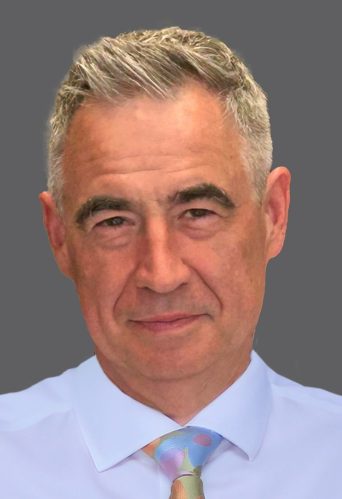
Moderating this discussion is a privilege for me. Over the past 30 years, I have worked in international branding and strategic communication, and for the last 20 years I have led the Eurasian Representative Office of BBC News. In this time, I have seen how powerful stories can shape perceptions of countries, industries, and identities. The challenge is always the same: to tell our story before others tell it for us, and to make sure that story resonates not only with the mind, but also with the heart. This is just one of such stories about Armenia:
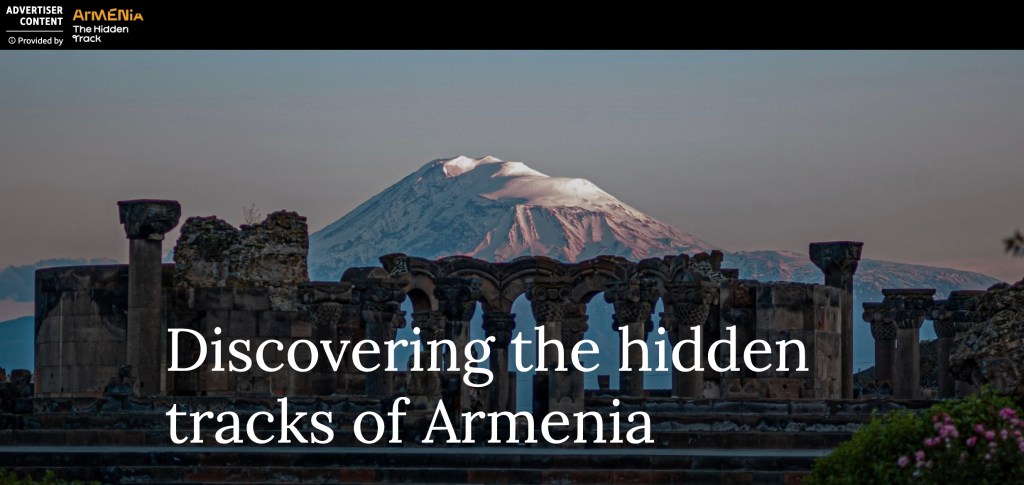
I look forward to our conversation in Yerevan. Together with my distinguished panellists, we will explore not only how to tell our story right, but how to make it stronger, more competitive, and more inspiring for the world.
I believe this conversation will be most valuable if it is not one-directional but interactive. As moderator, I want to bring not only the voices of our distinguished panelists but also the questions, concerns, and ideas of our wider community.
If there are particular aspects of destination branding you would like us to address — whether about visualisation of Armenian tourism brand by Dars Films, cultural storytelling, strategy and sustainability, or the social dimensions of tourism — I warmly invite you to share your questions. You can send them to me directly in advance, or pass them on during the Forum. I will do my best to bring them into the discussion, ensuring that the panel reflects the issues that matter most to you.
Together, let us make this session not only about telling our story right, but also about listening to the questions and perspectives that make our stories richer.


 Sergey Stanovkin